Sometimes I like to ponder how humanity would have developed if the indicators, metrics, and measures of success and progress had been different at various points in history. This counterfactual historical meta-analysis is based on the idea that milestones and indicators dictate the direction in which society moves collectively, where the money goes, and how success and failure are evaluated in history books.
Culture aside, there must be a deep reason why humans are so fixated on metrics, indicators, milestones and comparisons. These indicators, which are not always clearly measurable, serve as proxies or projections of factors that are of interest or concern someone else. The number of beads in your collar or feathers on your dress only makes sense if others care about them and agree on what they represent. For example, if you are a Renaissance ruler, the number of books you own, the quality of your ornaments, the number of statues, and the height of your towers and churches serve to project power and deter and intimidate your never-short-of-supply enemies, as Ada Palmer points out in her very witty book, Inventing the Renaissance (Head of Zeus Ltd. 2026).
Fast-forward to the age of social networks and AI, and not much has changed. I’m talking about more than just extrinsically motivated teenagers building their self-worth based on likes, followers, and similar metrics. I’m also talking about corporations, universities, investors, and society in general forming opinions, recruiting personnel, and making decisions based on GDP, IQ scores, rankings, the number of citations and tokens, and so on. Sometimes it seems like society is racing to surpass some nebulous, ill-defined, or plainly nonsensical objective just for the sake of surpassing it, without asking the most basic questions: Why does it matter? Does it make sense? Is this the best way to measure whatever we want? First, what do we want to achieve or measure?
Take “superintelligence,” for instance. It’s a nonword that can mean everything and nothing at the same time. The idea of achieving superintelligence appears often in podcasts, pitches, mottos, and soon, even tattoos on the arms of charismatic tech leaders. However, I think we haven’t given enough thought to defining it. Nor have we asked ourselves the basic questions I mentioned above.
Superintelligence
I have a hard time understanding what people mean when they talk about superintelligence, let alone conjuring images of a machine (say an LLM) exhibiting traces of it. Of course, I have implicitly used my internal models, definitions, limitations, and prejudices to reach that state of mind. The idea that the word “intelligence” might be problematic in the context of artificial intelligence is not new. Maybe that’s why Richard Feynman preferred the term “advanced applications.”
These are the images that come to my mind when I hear “superintelligence.”
Initially, I think of my fellow townsman, Jaime García Serrano, dubbed the “human calculator.” He is a modern Beremis Samir who can perform non-trivial calculations, such as trigonometric functions and logarithms, in the blink of an eye. This also evokes thoughts of an advanced, benevolent civilization that has mastered the intricacies of space and time and survived the dangers of civilization infancy and self-annihilation. Then I realize that intelligence, although related, is more fundamental than calculation skills and technological advancement.
Then I think of a five-year-old ingeniously and creatively solving a scrambled Rubik’s Cube, or one of my favorite composers writing a beautiful, timeless piece. Finally, my mental image converges on what I consider the archetype of superintelligence. Someone who combines all of the above: an almost alien intellect, unmatched calculation skills, ingenuity, creativity, a sense of aesthetics, rigor, and a beautiful mind driven by curiosity and the passion to know and understand: Leonhard Euler.
That would be my definition and reference for testing superintelligence: someone or something that can invent new number systems, algebras, and mathematical theories as profound as topology, the calculus of variations, analysis, and graph theory. If you give me someone like Euler—not just a parrot that can translate and recite its entire opera omnia—but someone who can create similar work, then we can start talking.
Euler
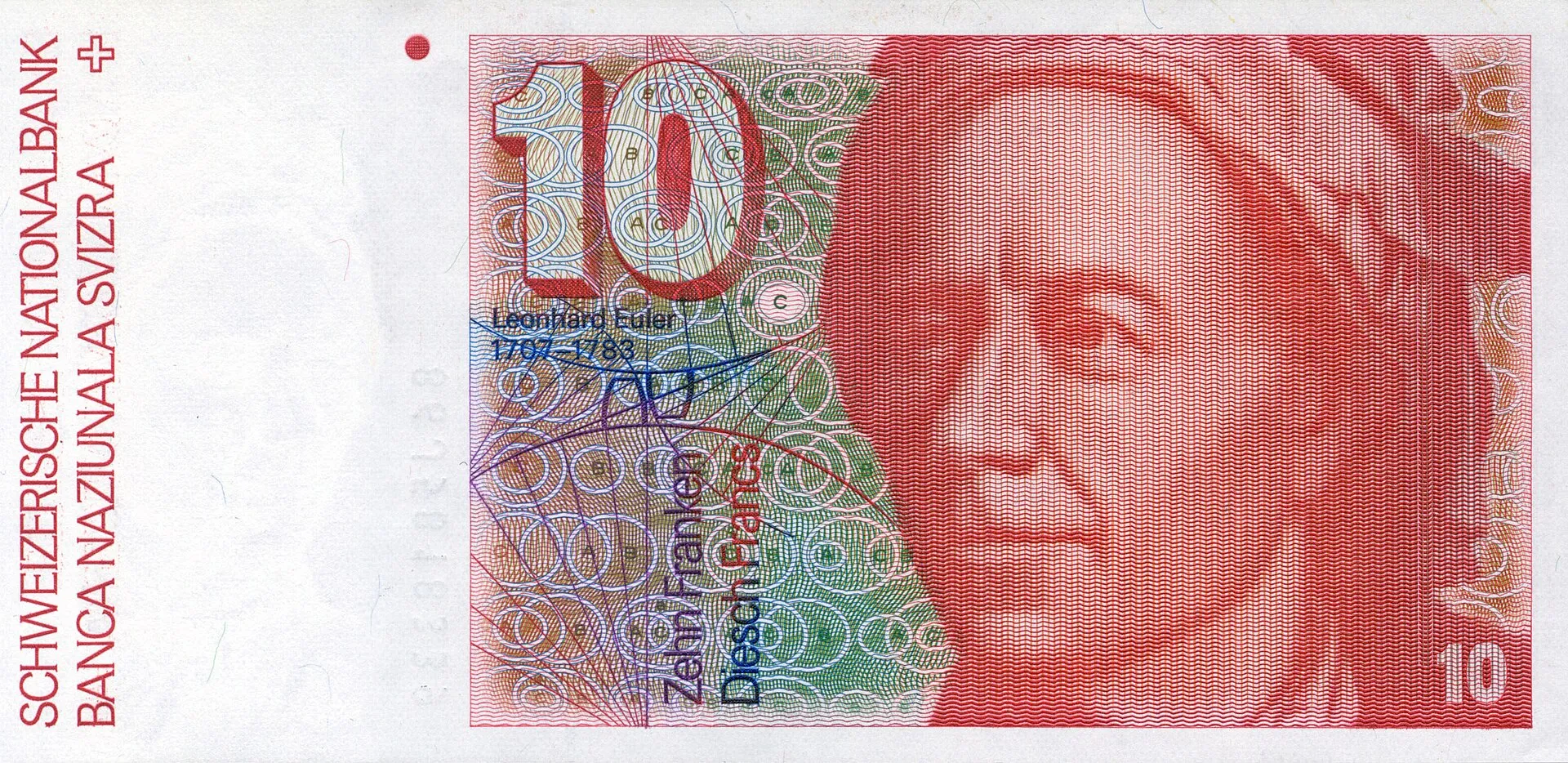
It is difficult to grasp the magnitude and importance of Leonhard Euler’s legacy, and it is hard to believe just how massive and diverse his contributions to mathematics and science were.
The appellation “genius,” later used to describe Gauss and Mozart, was not widely used during his lifetime, but by all measures, Euler was the towering genius of the Enlightenment.
I started writing this post last year after reading Ronald S. Calinger’s excellent biography, “Leonhard Euler: Mathematical Genius in the Enlightenment” (Princeton University Press, 2016). A 536-page book (670 pages including notes, bibliographical notes, and an index) is perhaps the only format that does justice to such an extraordinary and prolific life.
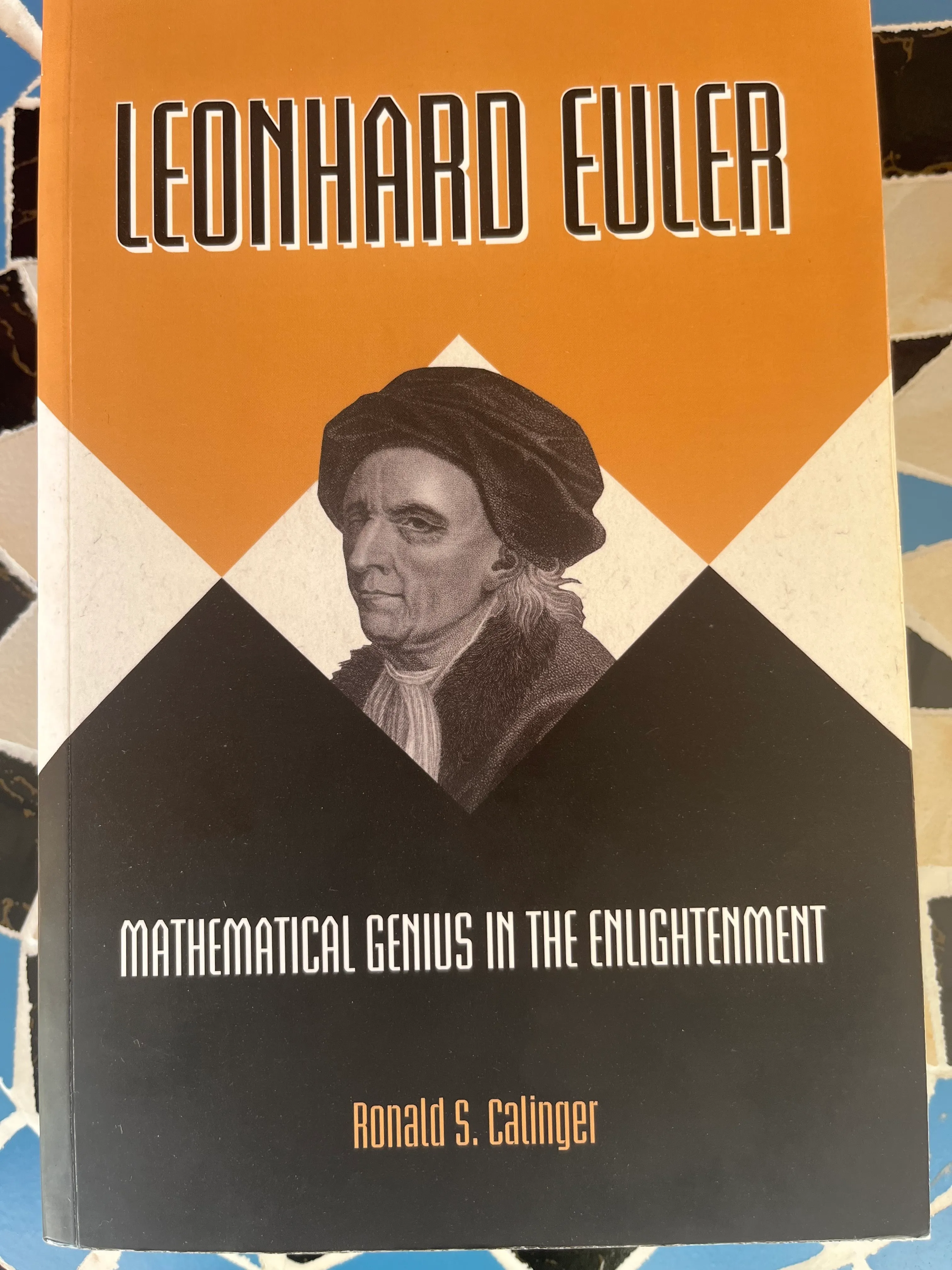
In many ways, Euler was the epitome of the European Enlightenment and the Republic of Letters. However, unlike other prominent mathematicians of the time such as Lagrange, D’Alambert, and Maupertius, he was not a nobleman, but rather the son of a Protestant minister from Basel. Euler lived and worked at a time when academies were the epicenter of applied and theoretical disciplines. Despite being a capable administrator and devoted teacher, he was not perceived as having the wit of a nobleman necessary for higher positions, such as president of the Academy of Berlin. Privilege and noble blood were still more important than merit at that time.
Euler pioneered or contributed to many disciplines: celestial mechanics, optics, fluid dynamics, music theory, graph theory, number theory, topology, the calculus of variations, geometry, algebra, trigonometry, and analysis. His scientific output was massive and prolific. Among the many foundational books he wrote, Methodus Inveniendi (Method of Discovery) was called “one of the most beautiful mathematical works ever written” by his editor, Constantin Carathéodory.
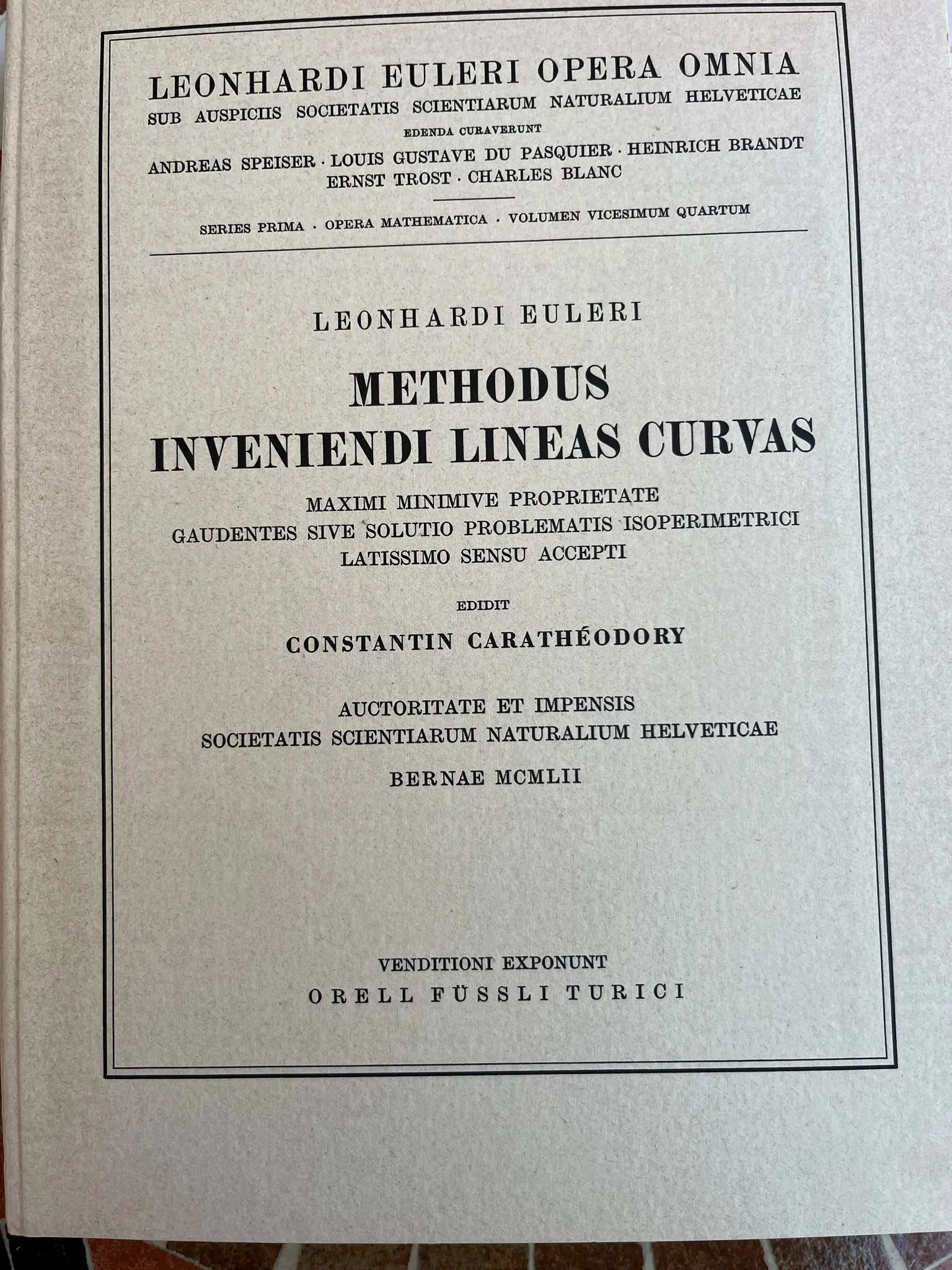
Euler excelled at collaborating and mentoring rising stars, such as Lagrange. He didn’t allow personal disputes to interfere with his work or affect his judgment of others. To me, he is the definition of a well-rounded person: a towering intellect and the most accomplished scholar of his time. He was also a capable administrator, prolific writer, devoted teacher and father, and, by all metrics, a happy person.
In celebration of Euler, I wrote a small library for plotting triangular and pentagonal numbers, one of the topics he worked on.